The modern healthcare system is caught in a paradox. On one hand, the depth of medical knowledge has never been greater; on the other, the cost of delivering that knowledge has become unsustainable. For decades, the industry has sought a silver bullet—a tool that could simultaneously reduce financial waste and improve patient outcomes. That tool has arrived, and it is not a new drug or surgical technique. It is the silent, tireless work of artificial intelligence in diagnostics. As we move through 2026, the evidence is irrefutable: AI is not merely a futuristic novelty; it is a critical infrastructure investment that is fundamentally lowering the cost of care while raising the floor for diagnostic accuracy. This is not a story about robots replacing doctors, but about how intelligent systems are enabling physicians to practice the highest level of medicine at a fraction of the historical expense.

The High Cost of Human Error and Redundancy
To understand the economic impact of AI, one must first grasp the financial hemorrhage caused by diagnostic errors and unnecessary procedures. In the United States alone, medical misdiagnoses contribute to an estimated 40,000 to 80,000 hospital deaths annually, with the associated malpractice and corrective care costs running into the tens of billions of dollars. Furthermore, the standard of care often dictates a “shotgun” approach to testing—ordering a battery of labs and scans to rule out every possibility, a practice that is both expensive and time-consuming. AI diagnostics address this inefficiency head-on. By analyzing a patient’s symptoms against vast, curated datasets, algorithms can recommend the most specific, high-yield tests first, eliminating the financial drag of redundant screenings. For a hospital system operating on thin margins, this capital allocation shift from broad, defensive medicine to precise, targeted diagnostics represents a significant line-item improvement.
Reducing the “Cost-to-Diagnose” Curve
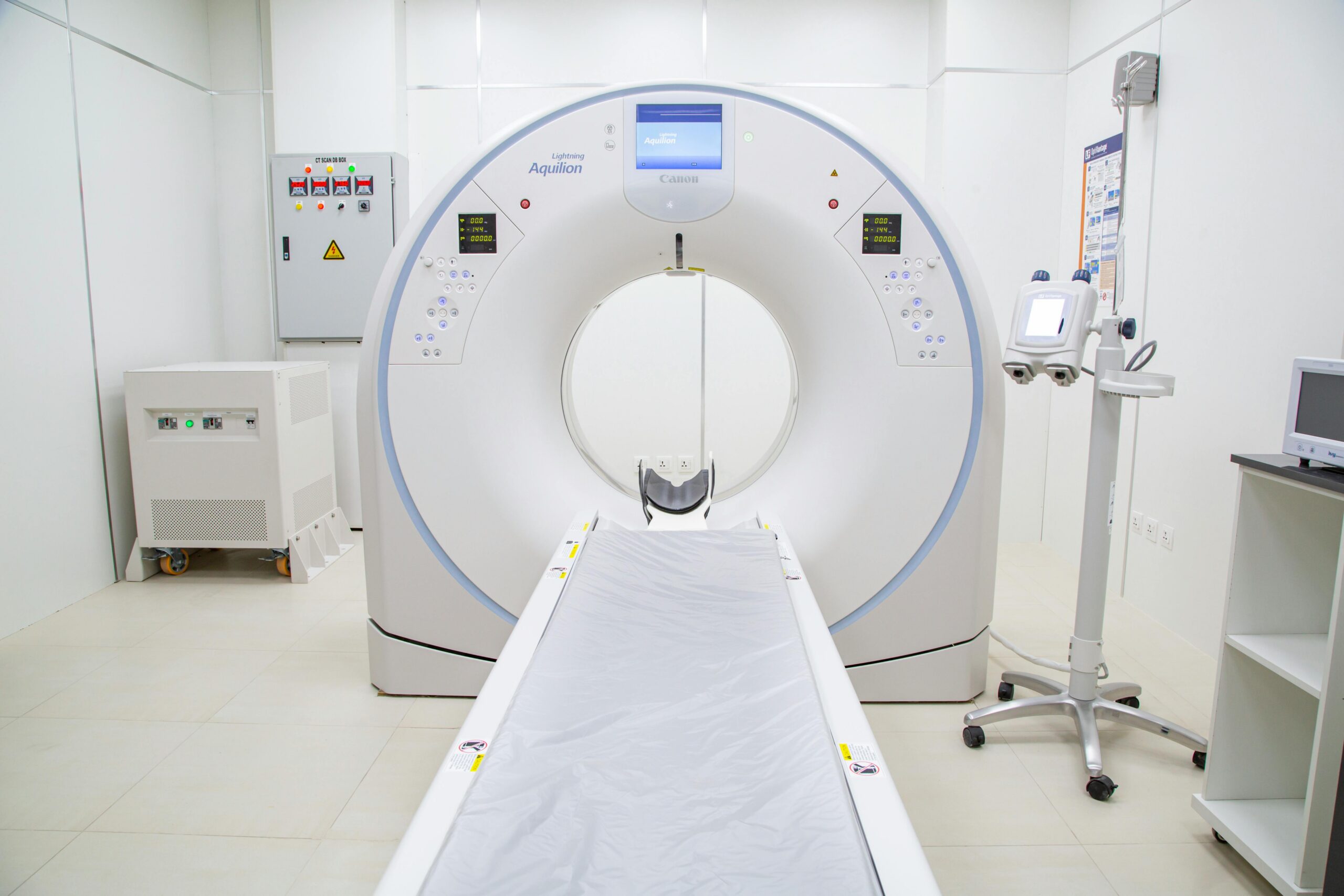
The most direct impact of AI is the compression of the diagnostic timeline. Consider the traditional pathway for a patient presenting with a suspicious lung nodule. Historically, this involved a series of CT scans, potential biopsies, and a wait of weeks for a pathologist’s review. Today, AI-powered radiology platforms can analyze that same CT scan in seconds, flagging nodules with a malignancy probability score that rivals, and in some cases surpasses, a human specialist. This speed has a direct economic consequence. Earlier detection means earlier intervention, which invariably means cheaper treatment. A Stage 1 cancer caught by an AI algorithm costs a fraction of the systemic chemotherapy and prolonged hospital stays required for a Stage 4 diagnosis. The “cost-to-diagnose” curve is flattening, and for high-volume screening programs—such as mammography or diabetic retinopathy checks—the savings are exponential. Hospitals are now contracting with AI diagnostic service providers on a per-scan basis, turning a fixed capital expense into a variable, scalable cost.
Automating the Labor-Intensive Workflow
Beyond the scan itself, AI is reducing the administrative burden that silently inflates every medical bill. A significant portion of a radiologist’s day is spent not on interpretation, but on triage—sorting through normal scans to find the critical ones. AI triage systems now handle this automatically. They prioritize urgent cases (such as a suspected intracranial hemorrhage) at the top of the reading queue, while flagging routine, normal studies for batch review. This workflow optimization allows a single radiologist to manage a higher volume of complex cases without burnout. The resulting reduction in overtime pay, locum tenens (temporary physician) costs, and turnaround time penalties translates directly into lower overhead for the healthcare provider.
Accuracy: The Counterweight to Cost Reduction
A common fear in cost-cutting initiatives is that quality will suffer. With AI diagnostics, the opposite is true. The technology excels at pattern recognition that eludes the human eye. For instance, in dermatology, AI models trained on millions of images of skin lesions can now differentiate between a benign mole and a melanoma with a specificity that reduces false positives by over 30%. In pathology, AI algorithms are being used as a “second set of eyes” on prostate and breast biopsies, catching micro-metastases that a fatigued pathologist might miss. This dual role—cost reduction paired with accuracy enhancement—is the unique value proposition of the technology. AI does not replace the clinician’s judgment; it augments it, providing a probabilistic safety net that reduces the incidence of both false negatives (missed disease) and false positives (unnecessary treatment).
How Does AI Handle the “Gray Zone”?
One of the most sophisticated applications of AI in 2026 is its ability to manage diagnostic uncertainty. In traditional medicine, an “indeterminate” finding on a scan often leads to an invasive biopsy or a “watch and wait” period that causes patient anxiety and delayed treatment. Modern AI systems, particularly those utilizing deep learning on longitudinal patient data, can now stratify these gray-zone findings. For example, an AI can analyze a patient’s past imaging, lab trends, and genetic markers to assign a dynamic risk score. This allows the physician to say with confidence, “This nodule has a 95% chance of being benign; let’s re-scan in six months,” rather than scheduling an immediate, costly procedure. This precision in risk stratification is the holy grail of cost-effective care.
The Shift to Preventive and Predictive Economics
The most profound economic shift driven by AI diagnostics is the transition from reactive to predictive medicine. By analyzing electronic health records (EHRs) across a population, AI can identify patients at high risk for developing chronic conditions like sepsis, kidney failure, or heart disease before they become symptomatic. This allows healthcare systems to deploy preventive care management programs—a far cheaper intervention than an emergency room visit or an ICU stay. A hospital system in the Midwest recently reported a 22% reduction in sepsis mortality and a 15% reduction in associated costs after implementing a real-time AI monitoring system that alerted nurses to subtle changes in vital signs hours before a crisis. This is the economics of prevention, and it is powered by data.
Key Takeaways: The Bottom Line on AI Diagnostics
- Elimination of Waste: AI reduces unnecessary testing by up to 30%, directly lowering patient bills and insurance premiums.
- Speed to Treatment: Faster diagnostics shorten hospital stays and reduce the need for expensive late-stage interventions.
- Labor Efficiency: Radiologists and pathologists can increase their throughput by 40-50% with AI triage, reducing the need for expensive locum tenens coverage.
- Risk Stratification: AI allows for precise “watch and wait” protocols, avoiding costly and invasive biopsies for benign conditions.
- Predictive Prevention: Early warning systems for sepsis and organ failure can save hospitals millions in ICU costs annually.
Navigating the New Landscape: Considerations for Healthcare Leaders
Despite the clear benefits, the integration of AI diagnostics is not without friction. Healthcare leaders must navigate issues of data privacy, algorithm bias (ensuring the AI is trained on diverse populations), and the upfront cost of implementation. However, the return on investment is becoming undeniable. Forward-thinking institutions are treating AI not as an IT project, but as a strategic financial instrument. They are renegotiating contracts with health insurance providers to include AI-verified diagnostics as a covered, premium service, and they are leveraging the data to negotiate better rates for medical malpractice insurance by demonstrating a lower error rate. The conversation has shifted from “Can we afford AI?” to “Can we afford to practice without it?”
Conclusion: The Future of Affordable, Accurate Care
As we look toward the remainder of this decade, the role of AI in diagnostics will only deepen. We are moving toward a system where a patient’s initial consultation may involve a digital twin of their physiology, analyzed by algorithms that have read every relevant paper published in the last year. This is not a cold, impersonal future. It is a future where the physician is freed from the drudgery of data sorting and can focus on the human elements of care: empathy, communication, and complex decision-making. The ultimate beneficiary is the patient, who receives a faster, more accurate diagnosis at a significantly lower cost. The algorithmic scalpel has cut through the Gordian knot of healthcare economics, and the prognosis is excellent.
Photo Credits
Photo by contact me +923323219715 on Pexels
- The Capital Allocation Dilemma: How Health Tech Leaders Can Balance Innovation with Fiscal Discipline in 2026 – 23/04/2026
- The Algorithmic Scalpel: How AI Diagnostics Are Reshaping Healthcare Economics and Accuracy – 23/04/2026
- The Great Medical Ledger: How Blockchain is Rewriting the Rules of Healthcare Data Security in 2026 – 23/04/2026

•
Leave a Reply